What Is a QR Code? History, How It Works, and Uses in 2025
Published on 2026-06-28 • By brnk Team
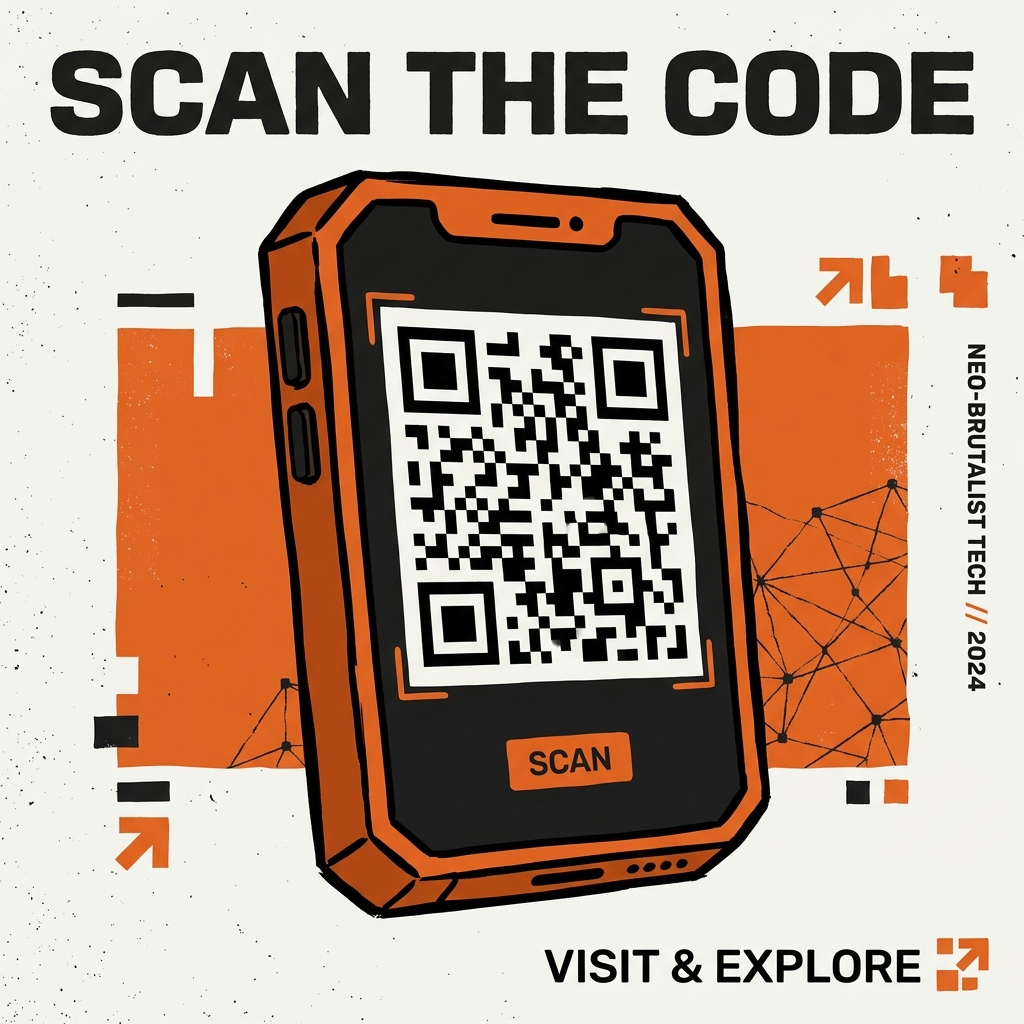
A Quick Response (QR) code is a two-dimensional barcode capable of storing massive amounts of data, which can be instantly read by smartphone cameras to trigger digital actions like opening a website. This matters because it creates a seamless bridge between offline physical materials and online experiences, revolutionizing how businesses share information and market their products. In this post, we will explore the history of QR codes, explain the underlying technology that makes them work, and highlight practical use cases in 2025.
A Brief History: From Auto Parts to Global Phenomenon
The story of the QR code begins in 1994 with a Japanese company called Denso Wave, a subsidiary of Toyota. At the time, the automotive manufacturing process relied heavily on standard UPC barcodes to track vehicle parts. However, traditional one-dimensional barcodes were severely limited; they could only hold about 20 alphanumeric characters and had to be scanned from a precise angle. As manufacturing became more complex, workers found themselves scanning multiple barcodes on a single part, which was inefficient and prone to error.
To solve this, engineer Masahiro Hara set out to develop a two-dimensional code that could hold more data and be read quickly from any orientation. Inspired by the black and white pieces of the board game Go, Hara's team invented the QR code. It could hold over 4,000 alphanumeric characters—hundreds of times more than a standard barcode—and could be scanned at high speeds. Initially used exclusively for tracking car parts, the technology was eventually released to the public, paving the way for the global adoption we see today. You can read more about its invention on the official Denso Wave history page.
How Does a QR Code Work?
At first glance, a QR code looks like a random arrangement of digital static, but it is actually a highly structured data format. A QR code stores information in both horizontal and vertical directions, which is why it can hold so much data in such a small physical space.
If you look closely at a standard QR code, you will notice three large squares in the corners. These are the finder patterns. They tell the scanner exactly where the edges of the code are and how it is oriented. This is why you can scan a QR code upside down or at an angle, and it still works perfectly.
The rest of the code contains the actual encoded data, along with timing patterns and alignment patterns. Crucially, QR codes incorporate Reed-Solomon error correction. This mathematical algorithm adds redundant data to the code, allowing it to remain scannable even if part of the code is obscured. At brnk.in, our generator creates codes with 15% error correction by default, striking the perfect balance between data density and resilience against smudges or damage.
Dynamic vs. Static QR Codes
When generating a QR code, you typically have two options: static or dynamic.
- Static QR Codes: The destination URL or text is hardcoded directly into the visual pattern of the code itself. Once printed, the destination can never be changed.
- Dynamic QR Codes: Instead of holding the final destination URL, a dynamic QR code holds a short redirect link. When scanned, the user visits the short link, which instantly forwards them to the final destination. The massive advantage here is that the final destination can be changed at any time in a database without needing to alter or reprint the physical QR code.
In Practice
Imagine a real estate agent placing a "For Sale" sign in front of a property. Instead of printing a massive, complex URL to the property's listing page, they generate a dynamic QR code using a short link like brnk.in/123-main-st. When a prospective buyer scans the sign, they are taken straight to a virtual tour. Once the house is sold, the agent can reuse the same physical sign and just update the short link to redirect to their main agency page or the next listing. No new signs to print, and the user experience is flawless.
Innovative Uses in 2025
In 2025, the application of QR codes has moved far beyond simple digital menus. We are seeing innovative use cases across various industries:
- Interactive Retail: Smart packaging now features QR codes that lead to augmented reality (AR) product demonstrations, verified supply chain transparency reports, and instant warranty registration.
- Seamless Payments: Peer-to-peer and merchant transactions via QR code have become the dominant form of cashless payment in many global markets, bypassing traditional credit card infrastructure.
- Event Management: Ticketing, interactive venue maps, and post-event analytics are all driven by dynamic, user-specific QR codes.
- Smart Business Cards: Physical networking has been streamlined; a single scan can instantly add a contact's details directly to a phone's address book.
Bridge the Gap with brnk.in
The true power of a modern QR code lies in its ability to be dynamic and trackable. By combining physical QR codes with robust link management, you gain unparalleled insight into offline user behavior. You can measure exactly how many people scanned your code, when they scanned it, and what devices they used.
To learn more about tracking link interactions, be sure to visit our track page.
Visit brnk.in today to generate your trackable short links and power your next QR code campaign!
Related Articles

brnk Team
The brnk team builds and writes about web tools, link management, and digital productivity. brnk.in is a free URL shortener and QR code generator used by marketers, developers, and content creators worldwide. Learn more about us.